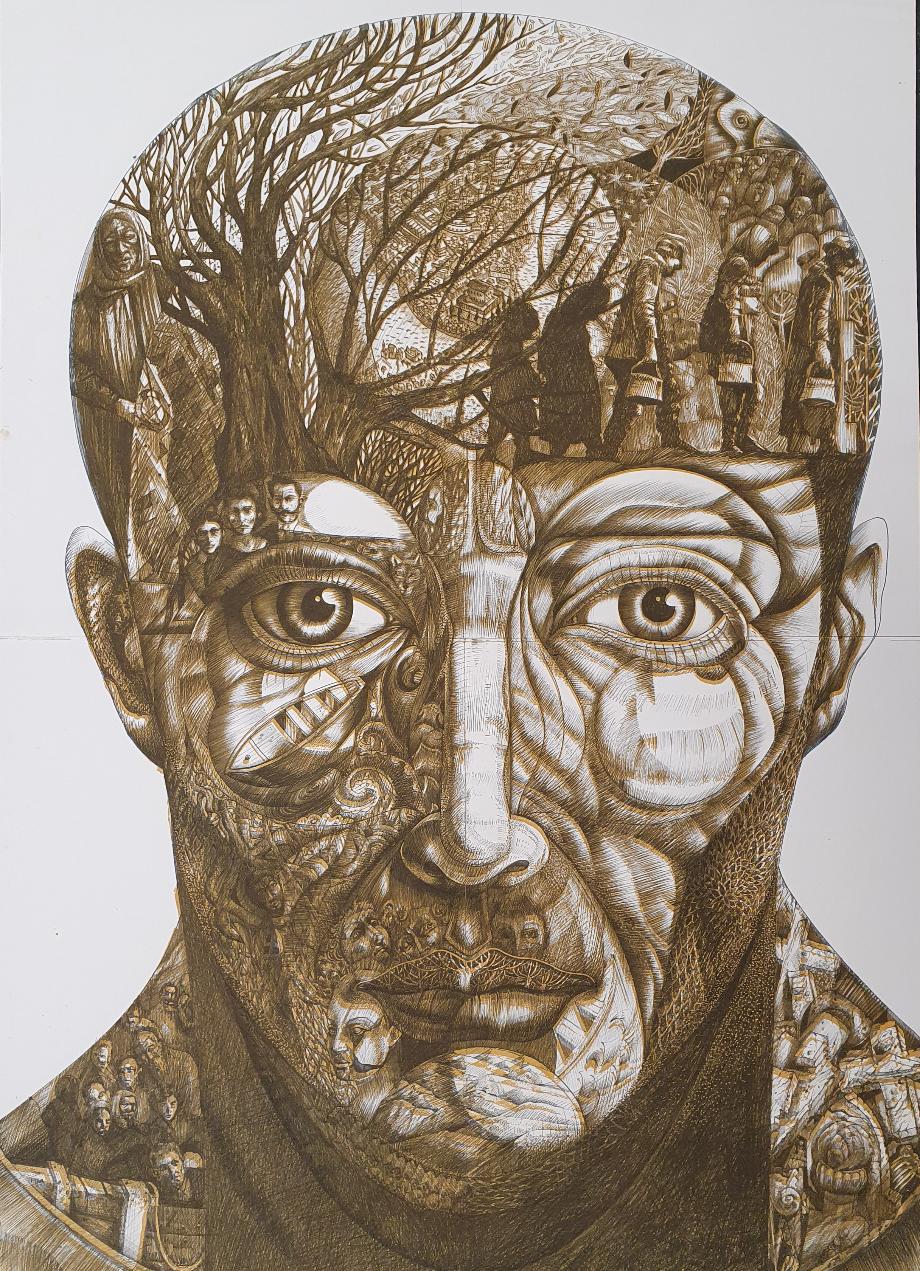
Lazarus
Maps and inherited geography
Before Lazarus there were the personal maps, the lost places, the family stories and the recurring question of how a person carries geography after it has been lost or renamed.
Named places, ancestral faces
Kırkağaç, Kelempes, grandmother, grandfather and ancestor images are central here. They turn DNA from data into place, kinship, loss and survival.
Public memory and witness
The same root later opens into Recovered Histories, the Istanbul work, foreign saints, illuminated surfaces and the wider archive ecology. Those are later branches, not replacements for this one.
Following my explorations in DNA analysis, I began tracing the movements of my ancestors around the world. I reached a point where it felt as if I was trying to resurrect the past. That is why the title became Lazarus. It names the act of restoring something lost, but also the melancholy that painful discoveries bring up.
Both my parents were refugees, escaping war and death. In this work I tried to portray that narrative, moving beyond the earlier Personal Maps, while keeping the connection with psychogeography and cultural history. The map did not disappear. It entered the face.
The names matter. Kırkağaç and Kelempes are not decorative references. They are part of the structure of the branch: named places where ancestry, refuge, displacement and the fragile survival of memory become visible. Boats, broken sculpture, mixed funerary stones, maps and faces all belong to this same field of remembered and lost ancestors.
Lazarus is not just a single image. It names a collective body of works concerned with restoring what has been lost. In the main image, the head becomes a place of crossings, holding children, trees, boats, broken sculpture, stones and journeying figures.
The face becomes a terrain, not only a likeness.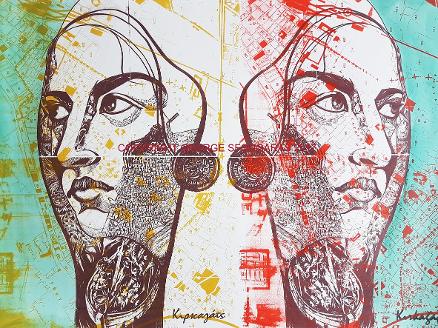
This is a primary work in the branch. The map on the face and in the background points towards Izmir and to Kırkağaç, where my grandmother’s family had lived. The work is about my grandmother, but it is also about place, community, refuge and the conditions that allow people to survive.
A lost or threatened place becomes a face.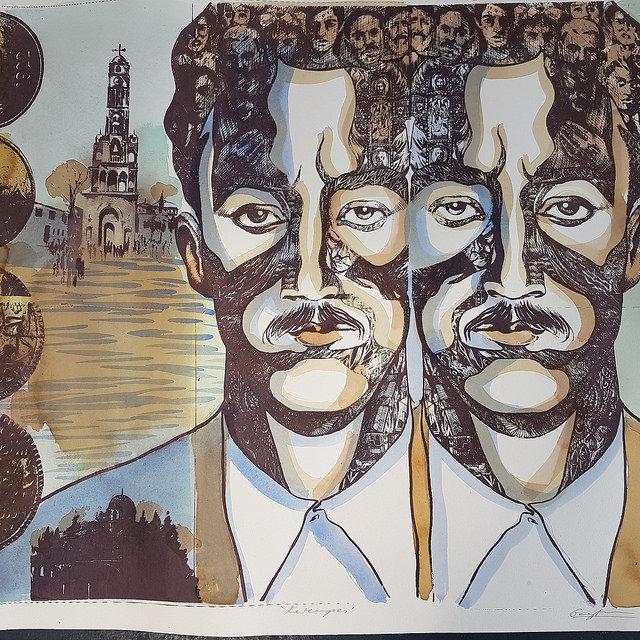
The grandfather image belongs beside Kırkağaç and inside the same Lazarus branch. The portrait depicts my grandfather, but the title on the print is Kelempes, the place where he was born, now no longer on any map. That absence is central to the work.
The person and the lost place are held together.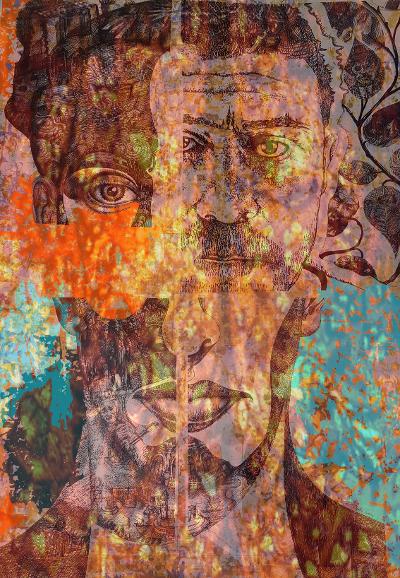
The ancestor images are primary, not background decoration. In later composite works, they sit in the leaves, in the beard, in the map and in the body of the image. They make the individual face porous, carrying earlier lives without reducing identity to a single origin.
The self is not alone. It is inhabited by inherited narratives.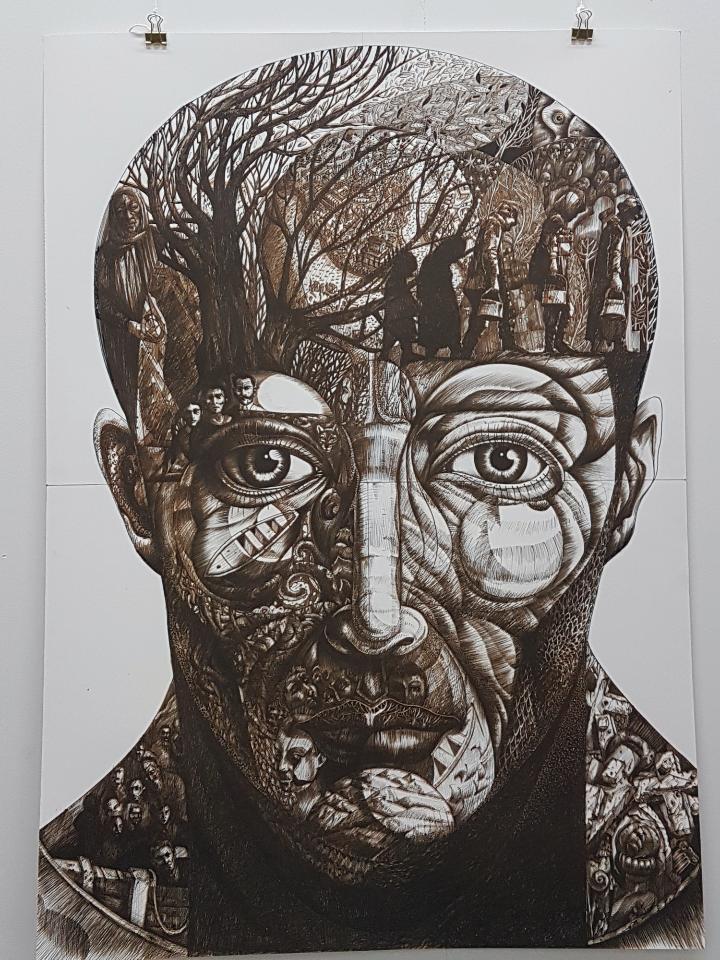
These works sit between the mapping works and the later public-history projects. They explain why the archive in later work is never only documentary. It is bodily, familial and emotionally charged.
This branch gives later civic work its ancestral pressure.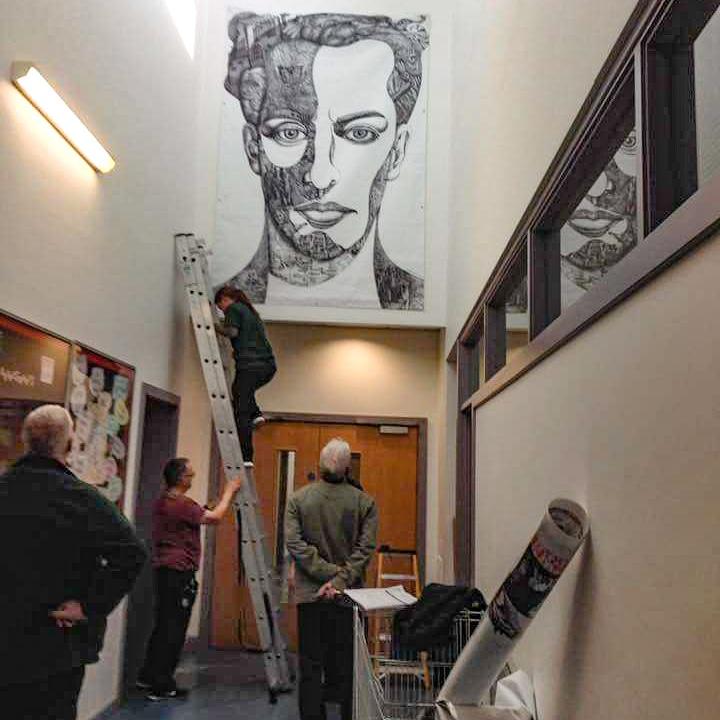
The vocabulary of face, map, fragment and historical pressure could become large enough to enter civic or educational space. This is one reason the branch matters. It shows how private ancestry could later move outward without losing its emotional source.
The branch does not replace the trunk. It makes one direction of growth visible.Why this branch matters
Lazarus, Kırkağaç, Kelempes and the ancestor images should be read together. They form the DNA and ancestral-place branch of the wider practice.
This is where data becomes grief, where geography enters the face, and where named places become part of the visual structure of memory. It is personal cosmography, but it also tries to speak beyond the personal towards shared humanity.
To resurrect the past is not to make it whole again. It is to acknowledge loss before moving on, and to admit that some fragments still call to us. Looking carefully is one form of responsibility.


Comments
Post a Comment
Your comments are my way of improving this discourse, so thank you in advance.